









 04 April 2025
  Ashish Dasadiya
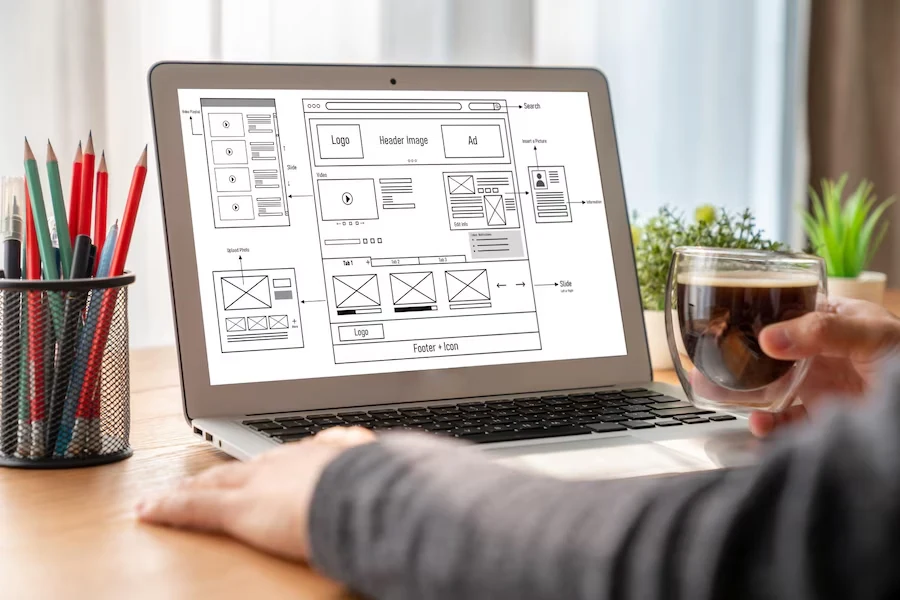
A wireframe is a visual representation of a website's layout, structure, and functionality. It helps designers, developers, and stakeholders communicate and visualize the website's design and functionality. In this guide, we'll explore the process of creating a wireframe for your website.
What is a Wireframe?
A wireframe is a low-fidelity sketch or digital representation of a website's layout, including:
 Basic layout: Header, footer,
navigation, and content areas.
Basic layout: Header, footer,
navigation, and content areas.
- Content organization: How content is
structured and prioritized.
- Functionality: Interactive elements,
such as buttons and forms.
Benefits of Wireframing
- Improved communication: Wireframes
facilitate discussion and feedback among team members and
stakeholders.
- Early detection of issues: Wireframes
help identify potential design and functionality
issues early on.
- Time-saving: Wireframes streamline the
design process by establishing a clear direction.
Tools for Wireframing
- Digital tools: Figma, Sketch, Adobe XD,
and Wireframe.cc.
- Paper and pencil: Simple, low-fidelity
wireframes can be created with paper and pencil.
Steps to Create a Wireframe
- Define your goals: Identify the
website's purpose, target audience, and key features.
- Sketch your ideas: Use paper or
digital tools to sketch out your ideas.
- Refine your wireframe: Iterate and
refine your wireframe based on feedback and testing.
- Test and validate: Test your wireframe
with users and stakeholders to validate your design.
Best Practices for Wireframing
- Keep it simple: Focus on layout and
functionality, rather than visual design.
- Use placeholders: Use placeholders for
images and content to focus on structure.
- Prioritize content: Organize content
based on importance and user needs.
Conclusion
Creating a wireframe is an essential step in the web design process. By following these steps and best practices, you can create a effective wireframe that helps you design a user-friendly and functional website.

 +91 - 7428894211
 contact@craftivecore.com
 10:00AM - 7:00PM(Mon - Fri)